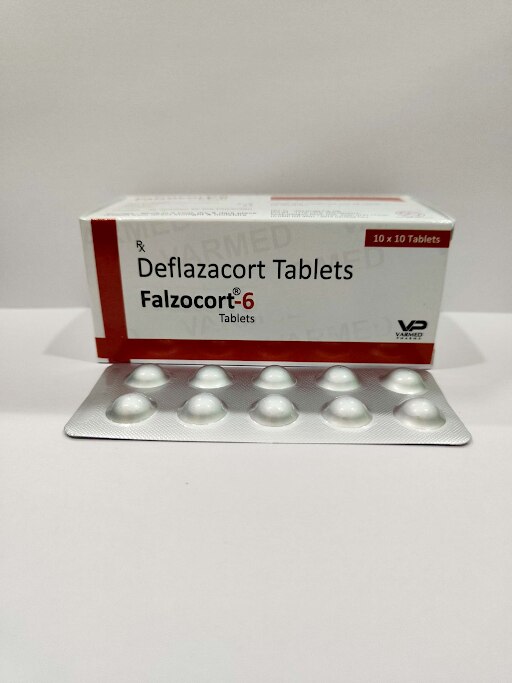
A 6 mg deflazacort tablet is a prescription systemic glucocorticoid, not a universal low-dose substitute for every corticosteroid. You will be able to assess when this strength fits a prescription, counsel patients on safe use, and compare a supplier or territory proposal without confusing commercial claims with clinical or regulatory approval.
Key takeaways
- Treat 6 mg as tablet strength, not a universal patient dose.
- Never stop prolonged deflazacort abruptly without prescriber guidance.
- Check infection risks, interacting medicines, vaccines and corticosteroid warnings.
- Ask suppliers for licence copies, batch documents and defined territory terms.
What does deflazacort 6 mg do, and when is this strength used?
Deflazacort is a synthetic glucocorticoid corticosteroid, not a herbal or Ayurvedic medicine. After conversion to its active metabolite, it enters cells and changes inflammatory and immune-response signalling, reducing swelling and suppressing overactive immune activity. The 6 mg label identifies tablet strength, not a diagnosis or universal dose.
| Situation | What 6 mg means | What the prescriber decides |
|---|---|---|
| Individual inflammatory or immune regimen | One available strength, possibly used in a lower-dose plan or taper | Dose according to disease, severity, treatment length, age, body weight, organ function and response |
| Duchenne muscular dystrophy | The U.S. FDA indication covers patients aged 2 years and older | Confirm the prescribed regimen and product information |
| Indian treatment | Do not import international indications automatically | Verify the approved Indian product information; another dose or corticosteroid may be appropriate |
Approximately 6 mg of deflazacort provides anti-inflammatory activity comparable to 5 mg of prednisone or prednisolone. This is an approximate conversion, not permission to substitute tablets. Anyone changing from another steroid needs clinical review because the indication, duration, response and withdrawal risk matter.
A prescriber may choose 6 mg within an individual regimen, while another case requires a different deflazacort strength or another corticosteroid. A search for generic pharma franchise deflazacort 6 mg in Ambala does not change prescription requirements or make the product herbal, Ayurvedic or suitable for self-treatment.
How should a patient take, miss and stop deflazacort?
Follow the prescriber’s written dose and treatment duration; a 6 mg strength does not establish a universal dose. Taking more tablets to match another steroid, or changing the regimen because the illness feels worse, can cause harm.
1. Take the tablet at the prescribed time with food to reduce stomach discomfort. A morning schedule is common when the regimen permits, but the prescriber’s instructions control. Do not split, double, or combine a 6 mg tablet with another steroid unless the prescription specifically says so.
2. If you miss a dose, check the dispensing label or contact your pharmacist. Take it when remembered if the next dose is not near; skip it when the next dose is near. Never take two doses together because the correct action depends on the timing and regimen.
3. Do not stop long-term or high-dose treatment abruptly. Prolonged use can suppress adrenal function, and sudden withdrawal can cause corticosteroid withdrawal or adrenal insufficiency. The prescriber decides whether tapering is needed and sets the pace according to your dose, treatment duration, illness and clinical response.
Do not self-medicate, reuse leftover tablets for a new illness, or share them. Advice from a deflazacort 6 mg tablet supplier cannot replace patient-specific clinical guidance. Ask a pharmacist or prescriber before treatment for a child, after repeated courses, or when switching from another corticosteroid.
Which adverse effects and warning signs need attention?
Most adverse effects are dose-related or become more likely with longer systemic exposure. Increased appetite, indigestion, sleep disturbance, mood changes, fluid retention, raised blood glucose and greater susceptibility to infection can occur. Longer or higher-dose treatment also raises the risk of adrenal suppression, osteoporosis, cataract, glaucoma, psychiatric effects and impaired growth in children.
| Effect pattern | Examples | What to do |
|---|---|---|
| Common or dose-related | Increased appetite, indigestion, insomnia, mood change, fluid retention, raised glucose | Report persistent or troublesome effects; follow glucose or blood-pressure monitoring instructions |
| Serious or urgent | Fever or severe infection symptoms, worsening breathlessness, black stools, vomiting blood, marked agitation, depression, severe mood change, vision change, eye pain, facial or throat swelling, wheezing, difficulty breathing | Seek urgent medical care; do not wait for the next routine review |
Before dispensing, ask about:
- Untreated infection, diabetes, hypertension, osteoporosis, peptic ulcer disease, glaucoma, liver disease or kidney disease
- Pregnancy and breastfeeding
- Recent or planned vaccination
- Diabetes monitoring, as instructed by the prescriber
- Blood-pressure monitoring if the patient has hypertension
A prescriber must weigh these factors against the treatment need. Do not treat a franchise-pack insert as permission to start deflazacort without patient assessment. Tell patients not to stop prolonged or high-dose treatment abruptly: adrenal suppression and withdrawal can follow, so the prescriber must decide whether tapering is needed.
Which medicines and vaccines must be checked before dispensing?
Before supplying deflazacort, request the complete medicine list, including over-the-counter products, vitamins and supplements. A 6 mg pack does not make interaction screening optional, especially when the same strength is promoted across several specialties.
| Medicine or vaccine group | Why it matters | Required action |
|---|---|---|
| NSAIDs, such as ibuprofen or diclofenac | Combined use can increase gastrointestinal irritation, ulceration or bleeding risk | Refer the combination for clinical review |
| Anticoagulants, such as warfarin | Bleeding risk and anticoagulant response require monitoring | Ask the prescriber or pharmacist to assess it |
| Antidiabetic medicines | Corticosteroids can raise blood glucose and alter treatment needs | Arrange glucose monitoring and regimen review |
| Antiepileptics | Enzyme effects can change corticosteroid exposure | Check the specific medicine and dose |
| Rifampicin and other CYP3A4 inducers | They can reduce deflazacort exposure | Refer for prescriber-directed assessment |
| Certain antifungals and other strong CYP3A4 inhibitors | They can increase deflazacort exposure | Do not promise a universal dose adjustment |
| Recent or planned live vaccines | Systemic corticosteroid immunosuppression can make live-vaccine use unsafe or reduce the expected response | Obtain clinical advice on timing |
The exact interaction depends on the medicine, dose and treatment duration. An interaction check is not a dose conversion: when a patient starts or stops an interacting medicine, the prescriber must reassess the regimen rather than apply an automatic adjustment.
How do you assess a deflazacort franchise supplier near Ambala?
A supplier passes the first screen only when you can identify the actual manufacturer and trace each deflazacort 6 mg batch to lawful stock. “Generic” proves neither manufacturing quality nor therapeutic equivalence.
Ask for:
- The manufacturer’s name, manufacturing licence and applicable GMP evidence
- Batch number, expiry date and certificate of analysis for the proposed stock
- The approved pack insert, complaint procedure and recall procedure
- Legally valid purchase invoices showing the stock entering Haryana
- Current CDSCO requirements and the Haryana licensing position before sale
| Check | What to compare | Failure to avoid |
|---|---|---|
| Product evidence | Allopathic deflazacort documents and batch traceability | Accepting promotional claims or an untraceable batch |
| Territory contract | Boundaries, channel restrictions, minimum purchases, expiry returns, price-revision rights, supply timelines and termination terms | Treating PCD or monopoly language as statutory exclusivity |
| Stock handling | Storage records, dispatch controls and invoice continuity | Choosing only on local availability or fast delivery |
A buyer seeking a generic pharma franchise in Ambala or a pharma franchise near Ambala should apply this evidence test to Varmed Pharma Pvt Ltd and competing suppliers alike. Prescription status remains in force; a franchise arrangement does not permit unrestricted sale.
Request separate documentation for any herbal PCD franchise. Deflazacort is synthetic, allopathic and not Ayurvedic; an AYUSH product cannot replace it or borrow its therapeutic claims.
Related product
 | TABLET ₹1200 FALZOCORT-6 Tablet contains Deflazacort 6 mg, a corticosteroid used for treating inflammation, autoimmune disorders, asthma, allergies, rheumatoid... View product → |
Frequently asked questions
What does deflazacort 6 mg do?
Deflazacort is a synthetic glucocorticoid that reduces inflammation and suppresses excessive immune activity. The 6 mg marking identifies tablet strength, not a diagnosis or standard dose.
What should a patient do after missing a deflazacort dose?
Follow the prescriber’s or product-label instructions. Do not double the next dose without medical advice, and ask the prescriber how to handle repeated missed doses.
Can a patient stop deflazacort suddenly?
Stopping after prolonged or high-dose treatment can cause problems because the body’s corticosteroid response may be suppressed. A prescriber should set any tapering schedule.
Which warnings need attention while taking deflazacort?
Seek medical advice for signs of infection, severe mood or behaviour changes, vision problems, unusual swelling, allergic reactions or symptoms of high blood sugar.
What must be checked before dispensing deflazacort?
Check the patient’s other medicines, infection history, diabetes and relevant medical conditions. Review live vaccines and immunisation plans with the prescriber because corticosteroid treatment can affect vaccine decisions.
Keywords